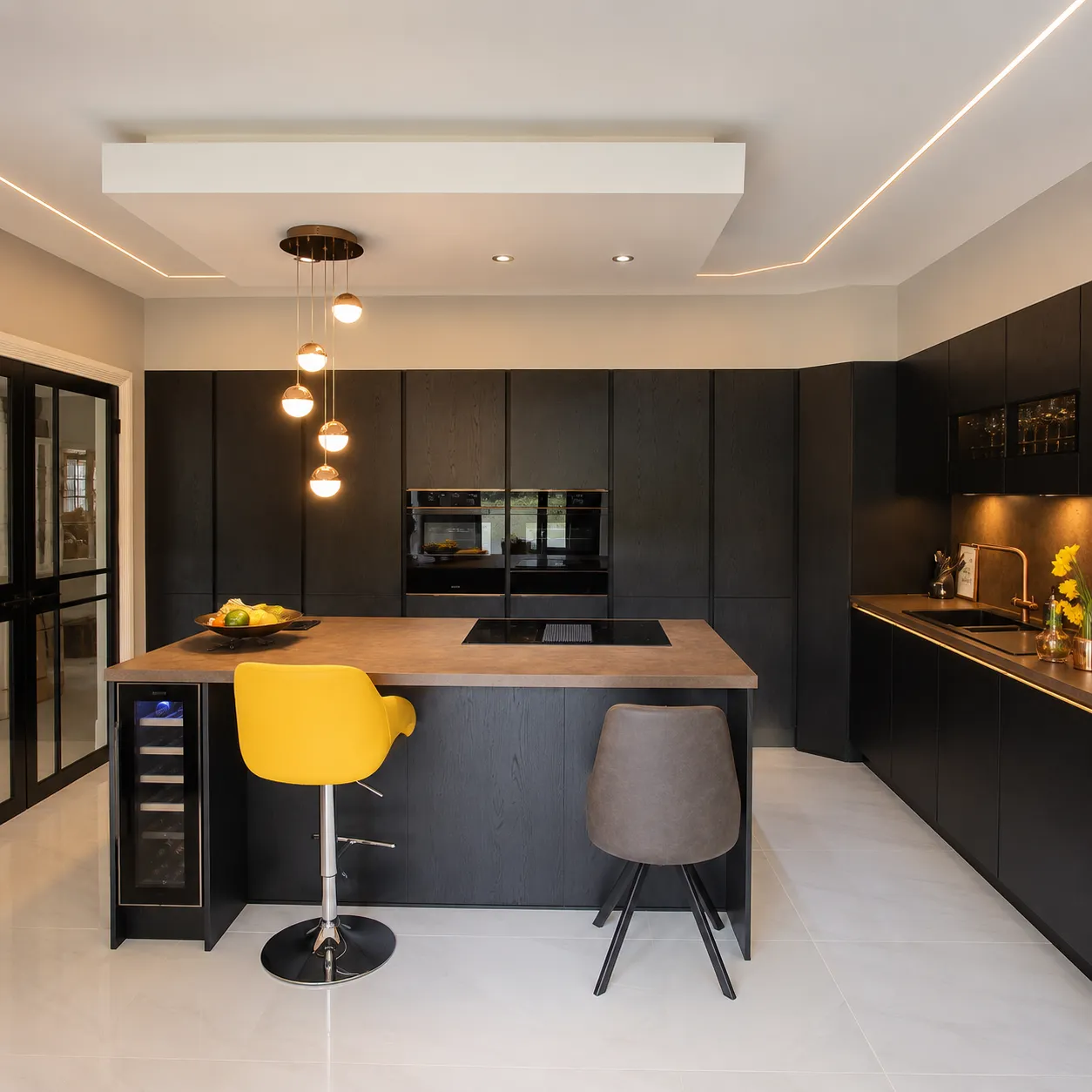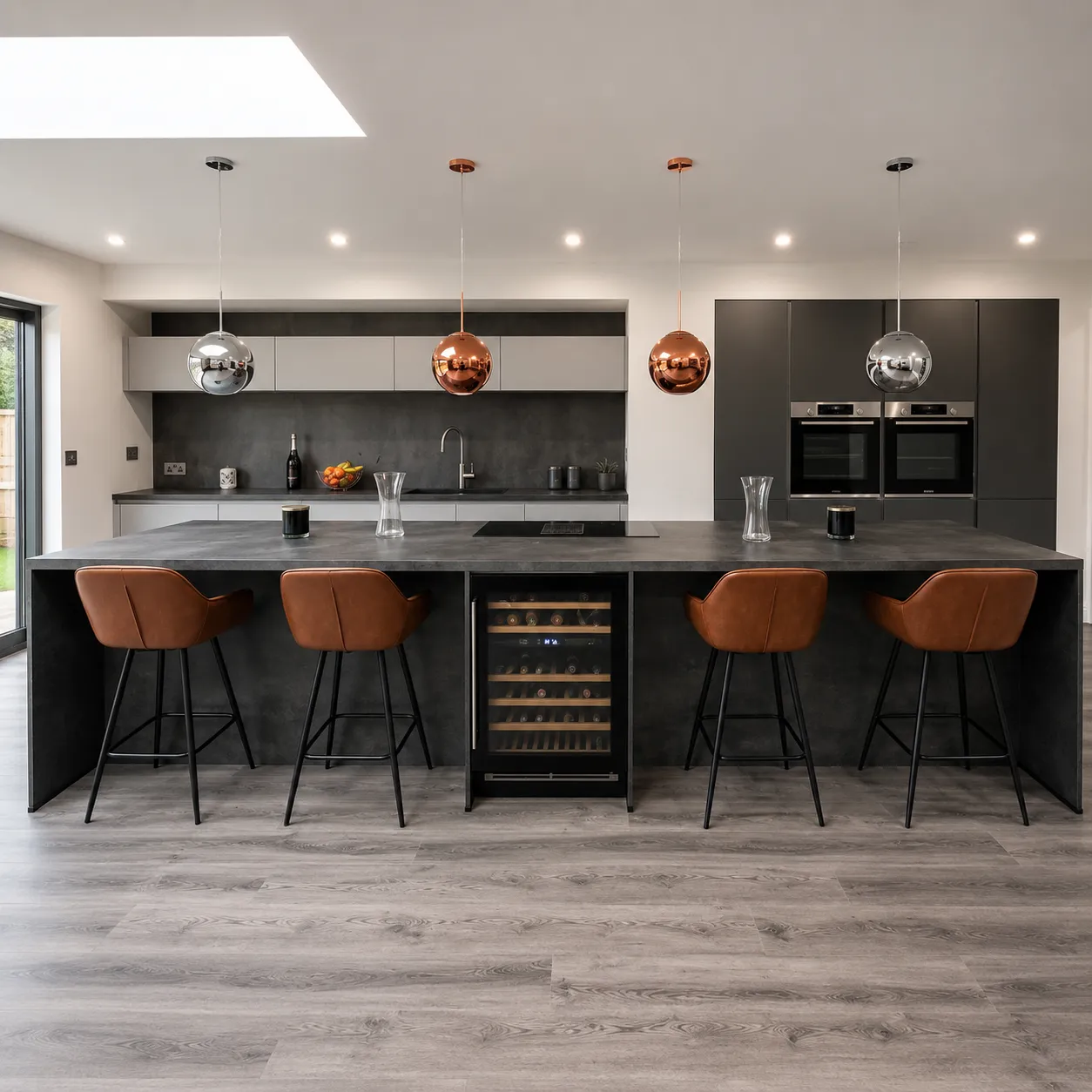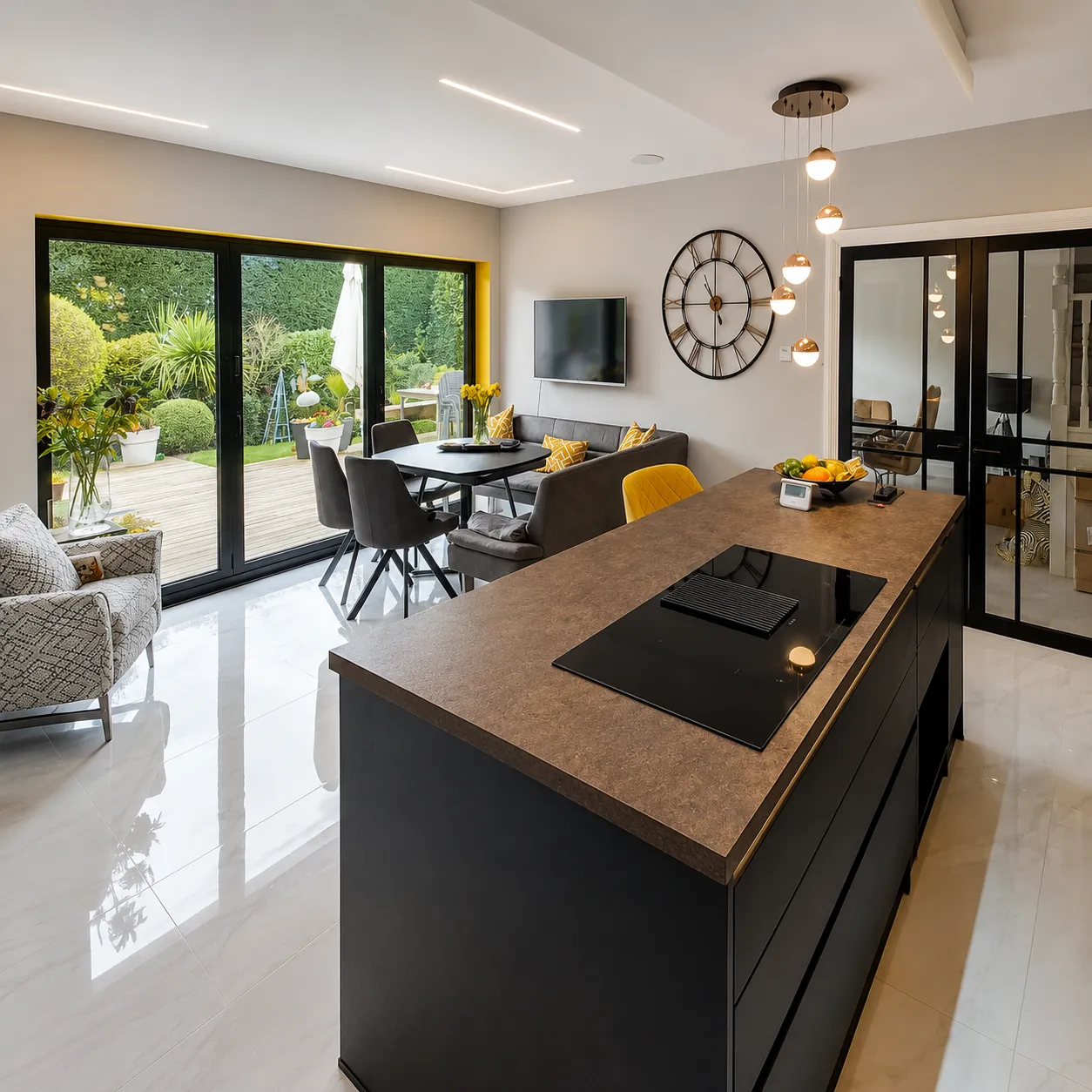
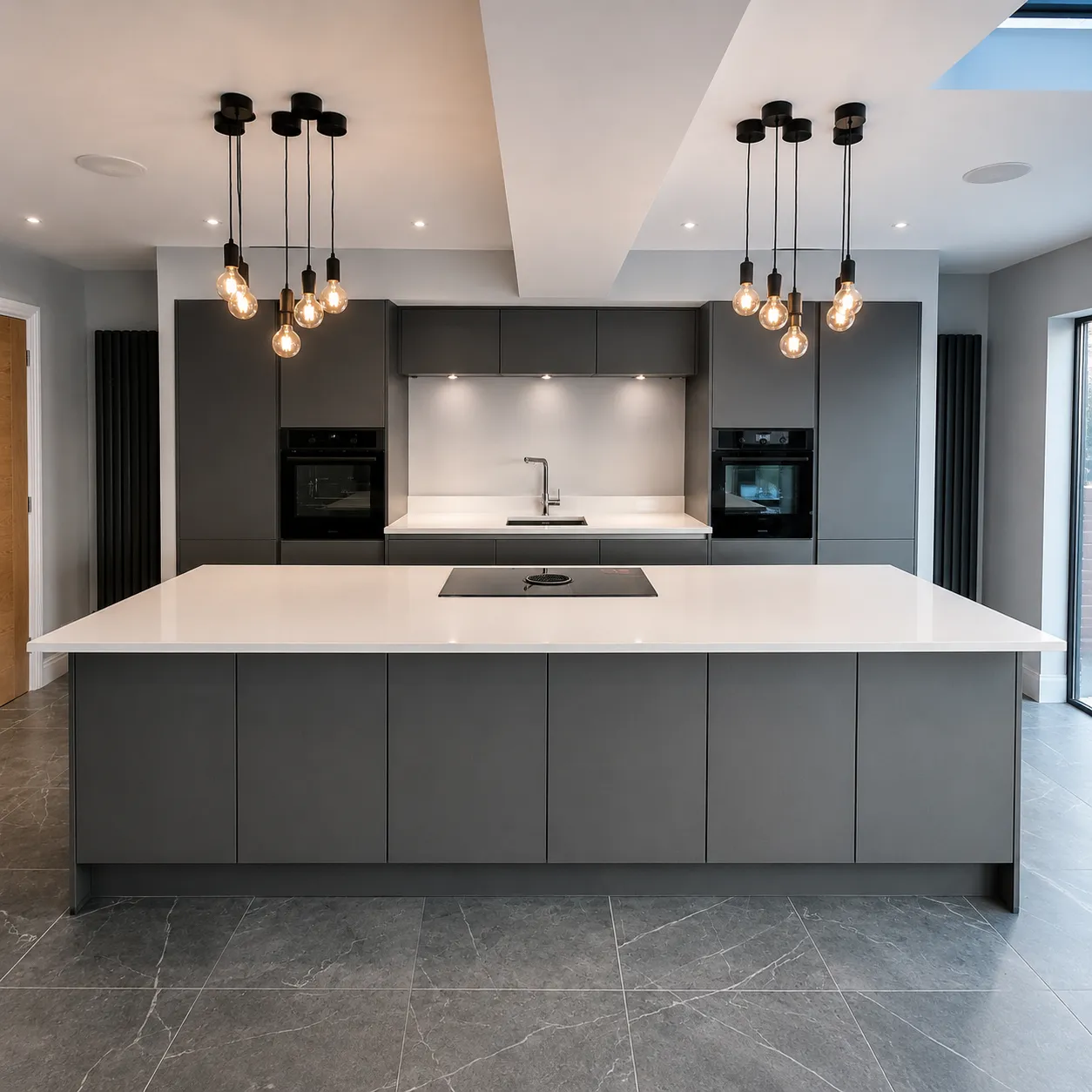
If you are choosing between a German kitchen and a high-street brand, the short answer is this: German kitchens usually win on build quality and longevity, and, bought through a low-overhead local specialist, they are often no more expensive. The high street wins on instant availability and the comfort of a familiar name.
This guide breaks down the real differences so you can decide what matters most for your home.
German vs high-street kitchens: the quick verdict
| German (e.g. Nobilia) | Typical high-street | |
|---|---|---|
| Construction | Rigid, pre-assembled in the factory | Often flat-pack, assembled on site |
| Carcase & hinges | Thicker board, heavy-duty hinges | Lighter board, standard hinges |
| Drawers | Precision soft-close, high weight rating | Varies; often lower spec |
| Longevity | 15–20+ years looking good | Can tire within 5–10 years |
| Price (like-for-like) | Competitive via a local specialist | Mid-range to premium |
| Availability | Built to order, a few weeks | Sometimes quicker off the shelf |
Choose German if you want a kitchen that lasts decades and is built precisely for your room. Choose the high street if you need something installed this week and longevity is not the priority.
Why does build quality differ so much?
The biggest difference is hidden behind the doors: the carcase (the box that makes up each unit).
German units like Nobilia are rigid-built, fully assembled, glued and squared in the factory before they reach your home. The board is thicker, the back panels are stronger, and the whole unit is more stable once fitted. Flat-pack units, by contrast, are assembled on your kitchen floor from a stack of panels, which can mean more flex and weaker joints over time.
You feel this difference every day: drawers that glide and close softly years later, doors that stay aligned, and units that do not sag under a stone worktop.
A kitchen showroom display always looks good. The real test is how it looks after five years of school runs, Sunday roasts and dishwasher steam. That is where German build quality earns its keep.
But aren’t German kitchens expensive?
This is the myth we hear most often. The reality depends entirely on who you buy from, not the country of manufacture.
Buy a German kitchen from a large national chain with showrooms on every retail park, and you are paying for all those overheads. Buy the same units from a low-overhead local specialist, where you deal directly with the designer, and the price is often similar to a mid-range high-street kitchen, and below the national chains.
We explain real, honest numbers in our guide to what a new kitchen costs in the North West. The summary: you do not have to pay a premium to get genuine German quality.
What about lead times and fitting?
This is the one genuine advantage of the high street: some ranges are available almost immediately. A German kitchen is built to your specification, so it takes a few weeks to arrive, but it comes precisely as designed, with no compromises on size or finish.
On fitting, you have full flexibility either way. At KuhinjaHaus you can:
- Take supply-only and use your own trusted builder, or
- Choose our fully managed installation, units, worktops, plumbing, electrics and flooring handled by one team.
Both routes are common, and there is never any pressure to use our fitters.
So which should you choose?
If your priorities are longevity, build quality and a kitchen designed precisely for your space, a German kitchen is hard to beat, especially once you realise the price gap is often a myth. If you need a kitchen installed in days and plan to move within a few years, a high-street option may suit.
For most homeowners planning to stay put, the maths favours German. Browse our kitchen ranges to see the styles, or book a free design consultation for an honest, no-obligation comparison against any high-street quote you already have.
Frequently asked questions
Are German kitchens really better quality?+
Generally, yes. German manufacturers like Nobilia build rigid (pre-assembled) units with thicker carcases, stronger hinges and precision soft-close drawers. The biggest difference is longevity, German kitchens tend to look and work well for far longer than flat-pack equivalents.
Is a German kitchen more expensive than a high-street one?+
Not always. A German kitchen bought through a low-overhead local specialist is often similar in price to a mid-range high-street kitchen, and cheaper than the big national chains for the same specification.
How long do German kitchens take to arrive?+
Typically a few weeks from order, as units are built to your specification in Germany and delivered to an agreed date. We confirm a clear timetable up front so you can plan any building work around it.
Can I get a German kitchen fitted by my own builder?+
Yes. You can buy supply-only and use your own fitter, or take our fully managed installation including plumbing and electrics. There is no pressure either way.
Dal Becic
Founder & Kitchen Designer, KuhinjaHaus
With 20+ years designing German kitchens, including time working directly with Nobilia, Dal leads every KuhinjaHaus design personally. Honest advice, no hard sell.